
Call us now :08045801740
 Send Inquiry

 Send Inquiry
Electromagnetic Flow Meters
Price 35630.00 INR/ Piece
MOQ : 1 Piece
Electromagnetic Flow Meters Specification
- Humidity %
- Up to 95% RH non-condensing
- Temperature Range
- 0C to 60C
- Measurement Range
- As per Pipe Size & Application (customizable)
- Frequency
- 50/60 Hz
- Application Media
- Conductive liquids
- Protection
- IP65 / IP68 (Optional)
- Pressure Range
- Up to 10 Bar
- Current Range
- 4-20mA
- Connectivity Type
- RS485/Modbus, 4-20mA output
- Diameter
- 15 mm to 600 mm
- Resolution
- 0.01 m3/h
- Equipment Type
- Electromagnetic Flow Meter
- Sensor Type
- Electromagnetic
- Flow Rate
- Factory Configurable
- Capacity
- Customized as per site requirement
- Usage
- Suitable for conducted liquids maintenance free full bore type
- Material
- Mild Steel / Stainless Steel
- Power Supply
- 230V AC / 24V DC
- Power Consumption
- Less than 15 VA
- Accuracy
- 0.5% of reading
- Display Type
- LCD Digital Display
- Color
- Sky Blue
- Range
- 0.5 to 10 m/s
- Enclosure Material
- Powder Coated Cast Aluminum
- Ingress Protection
- IP67/IP68 (Optional)
- Zero Point Stability
- Automatic
- Compliance
- CE & ISO certified
- Self-Diagnosis Function
- Available
- Lining Material
- PTFE / Hard Rubber / Neoprene / Polyurethane
- Output Signals
- Pulse, RS485, MODBUS, HART (optional)
- Installation
- Inline, Flanged or Insertion
- Alarm Functions
- Flow, Empty Pipe, Hardware Error
- Calibration
- Wet calibrated with NABL traceable certificate
- Cable Entries
- 2 x M20
- Display Features
- Backlit, 2-line or 3-line configurable
- Mounting Type
- Flanged / Wafer
- Power Supply Variation Tolerance
- 10%
- Electrode Material
- SS316L / Hastelloy C / Titanium / Tantalum
- Empty Pipe Detection
- Enabled
- Communication Protocols
- MODBUS RTU, HART PROFIBUS (Optional)
Electromagnetic Flow Meters Trade Information
- Minimum Order Quantity
- 1 Piece
- Supply Ability
- 50000 Pieces Per Month
- Delivery Time
- 1 Week
- Main Export Market(s)
- Asia
- Main Domestic Market
- All India
About Electromagnetic Flow Meters
The Electromagnetic Flow Meters simply known as mag flow meter is a volumetric flow meter which is ideally used for waste water applications and other applications that experience low pressure drop and with appropriate liquid conductivity required. The device doesnt have any moving parts and cannot work with hydrocarbons and distilled water. Electromagnetic Flow Meters detect flow by using Faraday's Law of induction. Inside an electromagnetic flow meter, there is an electromagnetic coil that generates a magnetic field. A magnetic field is applied to the metering tube, which results in a potential difference proportional to the flow velocity perpendicular to the flux lines.
Specifications - Sensors:
- Mastermag sensors are available in flanged / sandwich format
- Offer a wide choice of lining & electrode materials to satisfy all applications
- Metering Tube: Stainless steel
- Sizes: DN 10 to DN 1000
- Lining: PTFE / neoprene / soft rubber / hard rubber / PFA
- Electrodes: S.S. 316 / Hastelloy/ titanium / tantalum / platinum
- Process Connections: ANSI / DIN / BS10 / UNI / BS 4504 flanges
- Temperature: PTFE Lining (0-1500C Max.)
- Rubber Lining (0-900C Max.)
- Specifications - Transmitters:
- Type: Microprocessor based
- Flow Velocity Range: 0.5 m/s to 12 m/s
- LED Display: 4 digit for flow rate indication & 9 digit for total quantity
- Accuracy: 0.5%
- Repeatability: 0.2%
- Signal Output: 4-2
Technical specification
Working Temperature | 85 Degree Celcius rubber lining & 120 Degree Celcius for PTEE Lining |
Brand | Paras |
Model Name/Number | Paras Flow Meter |
Application Media | Industrial |
Color | Blue with sky Blue touch |
Max. Pressure | 10kg/cm2 max. higher on request |
Type | Electromagnetic |
Versatile Material and Mounting Options
Select from a range of electrode materials-SS316L, Hastelloy C, Titanium, or Tantalum-and linings such as PTFE, hard rubber, neoprene, or polyurethane. Compatible with flanged and wafer installation, these options ensure chemical resistance, mechanical durability, and adaptability to different pipelines, making them ideal for diverse industrial applications.
Advanced Features for Reliable Operation
Experience exceptional reliability with advanced self-diagnosis, empty pipe detection, and automatic zero point stability. The backlit LCD digital display offers 2-line or 3-line configuration, ensuring real-time monitoring and easy readability. Comprehensive alarm functions instantly detect flow, empty pipe, or hardware errors, maximizing operational safety.
Flexible Communication and Compliance
The flow meter is equipped with multiple output protocols, including RS485, MODBUS, HART, and PROFIBUS (optional), enabling seamless integration into industrial control systems. It meets international standards with CE & ISO certifications, wet NABL-traceable calibration, and IP65/IP68 ingress protection, assuring global compatibility and regulatory compliance.
FAQ's of Electromagnetic Flow Meters:
Q: How does the electromagnetic flow meter measure liquid flow?
A: The electromagnetic flow meter operates by applying Faraday's Law of Electromagnetic Induction. It generates a magnetic field in the flow tube, and as a conductive liquid passes through, voltage is induced proportional to the flow velocity, which is then measured by electrodes. This enables accurate, non-intrusive measurement of real-time flow rates in conductive liquids.Q: What benefits do various electrode and lining materials offer?
A: Selecting the appropriate electrode and lining materials-such as SS316L, Hastelloy C, Titanium, Tantalum, PTFE, or hard rubber-ensures chemical compatibility, corrosion resistance, and operational longevity. This flexibility allows the flow meter to be tailored for harsh chemicals, abrasive media, or demanding process conditions, optimizing both performance and lifespan.Q: When and where is it best to install an electromagnetic flow meter?
A: Installation is ideal in applications handling conductive liquids across sectors like water treatment, chemical processing, food & beverage, and pharmaceuticals. The meter is designed for inline, flanged, or insertion mounting in horizontal or vertical pipelines, and is suitable for indoor and outdoor sites requiring highly reliable, maintenance-free flow measurement.Q: What process is involved in calibrating the flow meter?
A: Our electromagnetic flow meters are wet-calibrated in a certified laboratory, with calibration traceable to NABL standards. This process involves comparing the meter's readings with established flow standards to ensure a high degree of accuracy, and a certificate is provided to confirm compliance with industry norms.Q: How is self-diagnosis and empty pipe detection beneficial?
A: Self-diagnosis continuously monitors the meter's health, promptly alerting operators to faults or irregularities, thus minimizing downtime. The empty pipe detection feature indicates if no liquid is present in the flow tube, helping prevent inaccurate readings and signaling operational issues, thereby enhancing process safety.Q: What usage advantages does the backlit, configurable LCD display provide?
A: The LCD digital display, available in backlit 2-line or 3-line configurations, provides clear, real-time visualization of measurement parameters. It enhances operator convenience by showcasing flow rates, totalizer values, and diagnostics, ensuring easily accessible data and quick response to alerts or changes in process conditions.Q: Where does this flow meter excel in terms of connectivity and system integration?
A: The meter includes versatile communication protocols such as RS485, MODBUS RTU, and optional HART or PROFIBUS, facilitating easy integration into SCADA, PLC, or distributed control systems. This ensures compatibility with modern industrial automation infrastructure for remote monitoring, control, and data management.
Tell us about your requirement

Price:
Quantity
Select Unit
- 50
- 100
- 200
- 250
- 500
- 1000+
Additional detail
Mobile number
Email

More Products in Water Meters Category

KBM-G Water Meter
Price 1485.00 INR / Piece
Minimum Order Quantity : 1 Piece
Material : Satinless Steel
Color : Golden
Size : 15MM50MM
Usage : Water Line
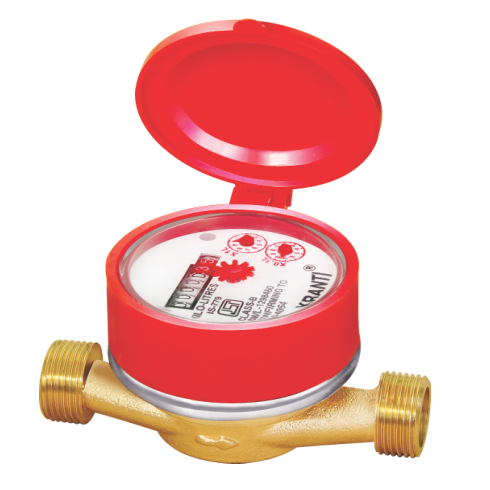
KBS Water Meter
Price 893.75 INR / Piece
Minimum Order Quantity : 1 Piece
Material : Brass
Color : Red & Golden
Size : 15MM
Usage : Water Line

Besto Water Meter
Price 1760 INR / Piece
Minimum Order Quantity : 1 Piece
Material : Brass
Color : Blue & Golden
Size : 15MM50MM
Usage : Water Line
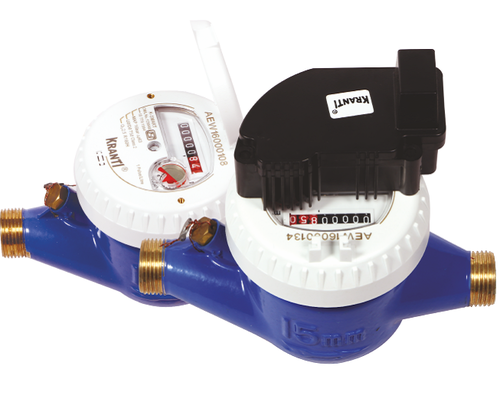
K - SMART
Minimum Order Quantity : 1 Piece
Material : Brass & Copper
Color : Blue, White & Black
Size : 15MM50MM
Usage : Water Line

 Send Inquiry
Our Products


C-54/55, Focal Point Extension, Jalandhar - 144004, Punjab, India

Mr Ashok Kumar Sharma
(Partner)
Mobile :08045801740
Mr. Paras Sharma
(C.E.O.)
Mobile :08045801740
 Send Inquiry
 Send SMS
 Call Me Free

Developed and Managed by Infocom Network Private Limited.


